
Comics as a medium have fascinated people for hundreds of years in various forms, but the art of using sequential images and text in story telling as a unique American expression took deep roots in the early 1900s as the west was finally settled. Massive paintings of cowboys in western expanses were pressed down into early pulp comics, and time marched onward until we arrived here, in the now. More than ever before, the elasticity of the medium of comics is being tested. What a comic can be, what it looks like, it’s components, are changing by the day. What an artist like Narwhal seems to have found in the modern expressions of the medium is that there remains a deep well still for storytelling between the panels and word bubbles of a comic page.
There are many reasons someone might buy a comic book, but when it comes to Narwhal’s work the main draw is the writing and the storytelling. This isn’t to knock Narwhal’s artistic style (or the work of his collaborators, who recently have shined on projects like Cerberus), but Narwhal is openly focused on storytelling and writing. Many in his position would consider rendering to be the ultimate obstruction, but this is perhaps what gives so many of his stories such charm. The contradiction of a tight compelling script juxtaposed with cartoonish two-dimensional characters and dynamically lit three-dimensional blender-built backgrounds can be bewildering to a reader who might be more familiar with a typical run of a DC or Marvel crimefighter.
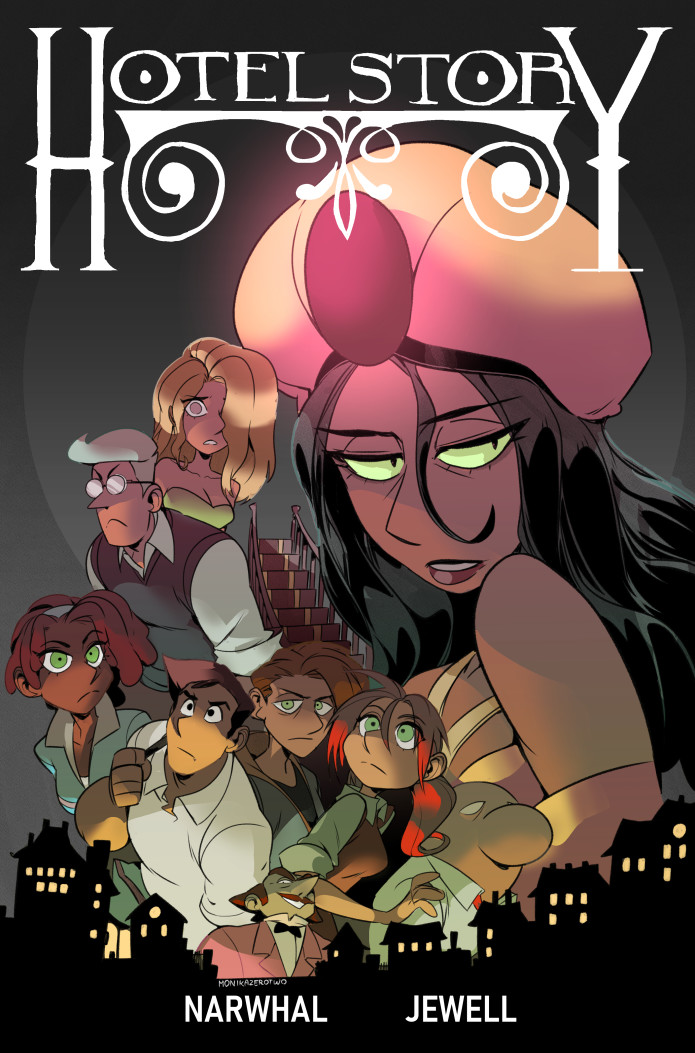
“Hotel Story” is another step in this unorthodox direction of constructing the “world” of a comic in three-dimensions using blender, and then adding the characters over top. Set inside the Constantinople Hotel, guests have gathered for a multitude of reasons, from business networking seminars to grand slam tennis tournaments. But on this particular night, powerful dark forces have conspired within the hotel to wreak havoc on the guests, and perhaps the world outside as well.
“Hotel Story” really stands out among Narwhal’s previous offerings due in part to just how refined the 2D-3D mixing feels in this book. Some of the credit for that surely should be afforded to Jared Jewell, the co-writer and artist on the book. Where attempts at this style in other works like the “Earthbound” series feel colder or more alien as a result of the mixing, “Hotel Story” achieves a more seamless feel. Part of this is certainly due to the collaboration on the 3D work and lighting.
The presentation of “Hotel Story” also offers readers a fair amount of detail and world building, which bodes well for this ongoing story. The mini comic included with each copy acts a great prelude, even at only eight pages. The comic itself is hefty and is an exciting opening that does a great job not only introducing it’s main cast, but offers loads of intriguing magic and violence, ultimately ending with a well earned raising of the stakes to begin issue two.
For those of you who enjoy a good mix of magic, mystery, occult debts, angelic violence, and a little “hubba, hubba,” this book is the one to check out.
If you’re looking for more from Narwhal, you can find his older books here.
Be on the look out for Narwhal’s next release, “Earthbound Grande Prix: Part 2” – you can sign up for notifications here.



 EXTERNAL GAZER
Leave a reply to HIGHLIGHT: CERBERUS – EXTERNAL GAZER Cancel reply