I recently went to Hot topic and found a really cool Limewire shirt. Yes, that Limewire the content pirating software that supplanted Napster and preceded Kazaa and existed during that weird bridge from DVDs to streaming apps period. After I bought the shirt I started thinking, “What ever happened to Limewire?”
Limewire holds a place in history as one of the largest open source content sharing and pirating software giants. The early 2000s was a magical time of ubiquitous content. While Napster opened the door to open source file sharing and downloading, it had one major flaw: Centralized servers. This made it easy to track and shutdown.
Limewire took the baton and expanded with a decentralized model making it more difficult to take down as there was no central point of failure. All it took was one person to upload a file to Limewire for videos music and images to propagate. It was great for a good minute but like all things on the internet it became bloated and at times a bit dark.
I’ll give a good personal example:
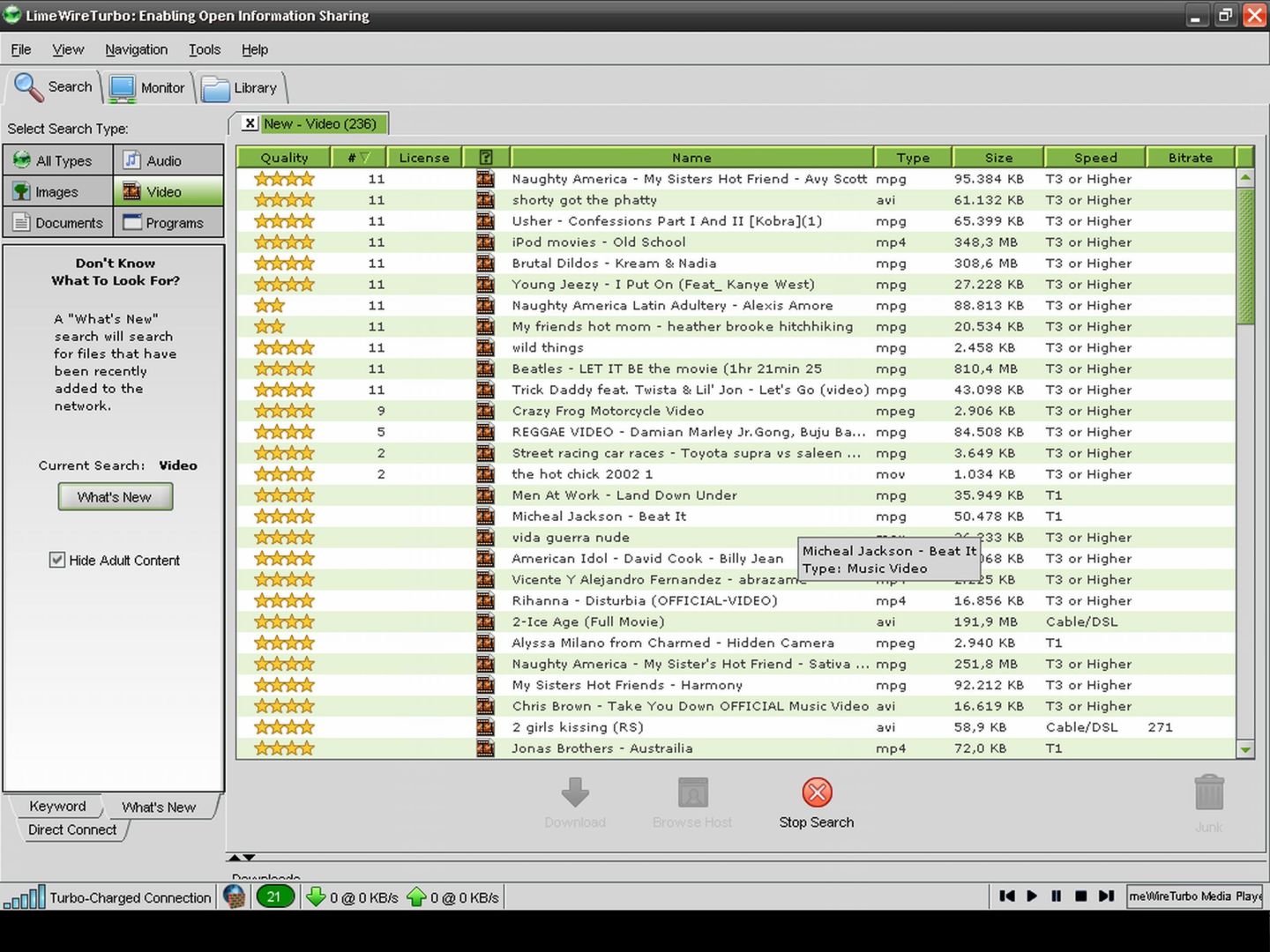
When I was 18 and “Star Wars: Revenge of the Sith” had just come out. My best friend and I were thinking, “Lets avoid paying to see it in theater,” decided to download it on Limewire. This was not high speed internet days so It took 3 days for the file to finish downloading. We fire up the file that’s clearly titled “Star Wars: Revenge of the Sith”… It ended being a video of a woman fucking a horse.
Needless to say it was one of the few times Limewire truly failed me and mentally scarred me but porn being labeled as the latest blockbuster movie wasn’t out of the ordinary. Vast amounts of music or videos were mislabeled, and you’d be lucky if it was just porn you ended up with because the worse possibility was that you downloaded a malware virus.
If you didn’t almost destroy your family computer in the name of free music & movies in the early 2000s did you even really live? And of course there were no thumbnails so you just had to trust the text. Every file you attempted to download was a sort of treasure chest and you just had to hold your breath to wait and see if you found gold or if it was a digital bomb ready to blow up in your face. Believe me YouTube clickbait has nothing on the oldschool days of Limewire. Despite some nefarious users, the early to mid 00’s can be seen as a utopic bubble of open source content that would come to an end by the turn of the decade when copyright crackdowns were swiftly imposed.
Demise
On October 26, 2010, U.S. federal judges ordered Lime Wire to prevent “the searching, downloading, uploading, file trading and/or file distribution functionality, and/or all functionality” of its software. When it came to the damages necessary to compensate the affected record labels; the injunction, initially suggested that LimeWire was responsible for $72 trillion in damages, before eventually settling for $105 million. Shortly afterward, the company stopped distributing the LimeWire software, and versions 5.5.11 and newer were disabled using a backdoor installed by the company.
And just like that the Oasis was gone. Sure file sharing protocols like Bittorrent exist but it’s not the same wild west attitude and could more or less be called a “regulated Limewire” as it only allows content that can be downloaded or uploaded legally.
It would seem that this would be where our story ends, but not quite. 11 years passed and it was in 2021 that brothers Paul and Julian Zehetmayr bought the Limewire IP; however they did not have intentions of turning it into a content pirating bay once again. Instead, Limewire has returned in the form of a blockchain NFT marketplace. Let that sink in.
Now I think it’s important to remember that NFT’s are not just monkey jpegs, they are a new type of umbrella file. It can be an mp4 mp3, jpeg, pdf, all can be NFTs. So when you hear NFT marketplace, while the vast majority is garbage art, just keep an open mind that it is supposed to basically mean file sharing marketplace.
The shift to a NFT marketplace makes sense for the Zehetmayrs as they have a history of successful tech ventures like ZeroSSL a website authentication service, and Eversign a e-signature service, so delving into the realm of NFTs which are supposed to be an immutable file format seems fitting.
And this video couldn’t be complete if I didn’t test out the new Limewire to see how things work. And things are very very different.
First the new Limewire seems to be built more as a creators hub than for simply sharing and consuming, and with AI being the content creation flavor of the year, Limewire leverages AI APIs like DALLe, Stable Diffusion, & Google Imagen, for pictures, and I believe they’re using Google AI for the music generation. The video creation hub is currently not available but supposed to be rolled out in the near future.
I played around with the image and music generators, and personally I still prefer MidJourney for my AI generated art compared to the APIs Limewire is using. And the music is underwhelming, but that may also be in part because I have not experimented with music prompts before so it may be a refinement and experimentation barrier. Now aside from essentially being an AI creator studio, there’s another massive change to the new Limewire.
If you watched my Documentary “Welcome to the Future” I discussed a new internet structure called micropayments where you pay cents or fractions of them to complete tasks across the web and apps. I believe it’s a way to deter internet bloat to a degree but also makes the user more intent based since they are paying for their actions. You guessed it, Limewire implements micropayments for creating on the platform. Every image or song you generate will cost fractions of a cent, which you can pay for using LimeWire tokens.
Yes, Limewire is a cryptocurrency now too. The world is just weird, and while I don’t think a micropayment AI creation platform is a bad idea; it does seem a bit strange to not just implement a subscription style plan the way Chat GPT and so many other AI content creation services have done. More so I’m having difficulty understanding why they bought the Limewire IP. Clearly the new owners wanted to capitalize on the nostalgia of the Limewire name, but that nostalgia would be from people who used the original Limewire and know it used to be free. It seems like a quick path toward the memetic base you wanted to create being disappointed by an “upgraded” version that feels worse than the original.
The only edge I see Limewire having in the NFT marketplace currently is that it’s a creation platform and marketplace leveraging AI, but how long before every NFT marketplace with a crypto token is doing the same.
Limewire’s return made a splash in the News for a couple of weeks until people realized. “oh it’s just another blockchain project now.”
The New LImewire is an example of how just slapping a brand name on something unrelated to the original brands purpose doesn’t fly with the built in user base. Maybe the new Limewire will end up being a bright return to success story, and maybe it just languishes in the massive and expanding sea of blockchain projects, but only time will tell.




 EXTERNAL GAZER
Leave a comment