

Boktai is a series of action-adventure games developed by Hideo Kojima’s team, Kojima Productions, and released for the Game Boy Advance between 2003 and 2006. The games were known for their innovative use of a solar sensor that allowed players to interact with the game’s world in real-time based on the amount of sunlight detected by the cartridge. The first game in the series, “Boktai: The Sun is in Your Hand,” was released in Japan and North America in 2003 and Europe the following year.
The game follows the story of Django, a young vampire hunter who wields a solar gun that can only be powered by sunlight. The game’s unique solar sensor allowed players to charge their weapon by holding it up to a source of light, such as a lamp or the sun.
In an interview with Nintendo Dream translated by Shmuplations, Hideo Kojima revealed that he had originally come up with the idea for Boktai as a way to get kids playing outside and enjoying the sunshine. He also wanted to explore the idea of incorporating real-world elements into a video game, such as the player’s location and the time of day. The game’s solar sensor was a major part of this idea. Konami had recently developed a handheld medical device with many sensors as components, and Kojima and his team worked closely with the sunlight sensor’s manufacturer to ensure incorporate it directly into the GameBoy Advanced Cartridge. They also included a feature that allowed players to adjust the sensitivity of the sensor to account for different lighting conditions.

In addition to the solar sensor, the game also featured a real-time clock chip to allow for a day to night cycle that affected gameplay. . The game’s setting and themes were also noteworthy. Boktai takes place in a world where vampires have taken over. Django is one of the few remaining vampire hunters, and his quest to rid the world of the undead is central to the game’s plot. The game also explores themes of morality and the nature of good and evil. Despite it’s younger target demographic, the story is universal and can be enjoyed at any age.
The game’s gameplay was a mix of action, exploration, stealth and puzzle-solving. Players had to navigate through various dungeons and environments while using their solar gun to defeat enemies and solve puzzles. Despite its innovative gameplay and unique concept, Boktai was not a huge commercial success. The game’s reliance on the solar sensor and its relatively niche audience of Game Boy Advance owners likely contributed to its limited appeal. However, the game did receive positive reviews from critics and has developed a cult following over the years.
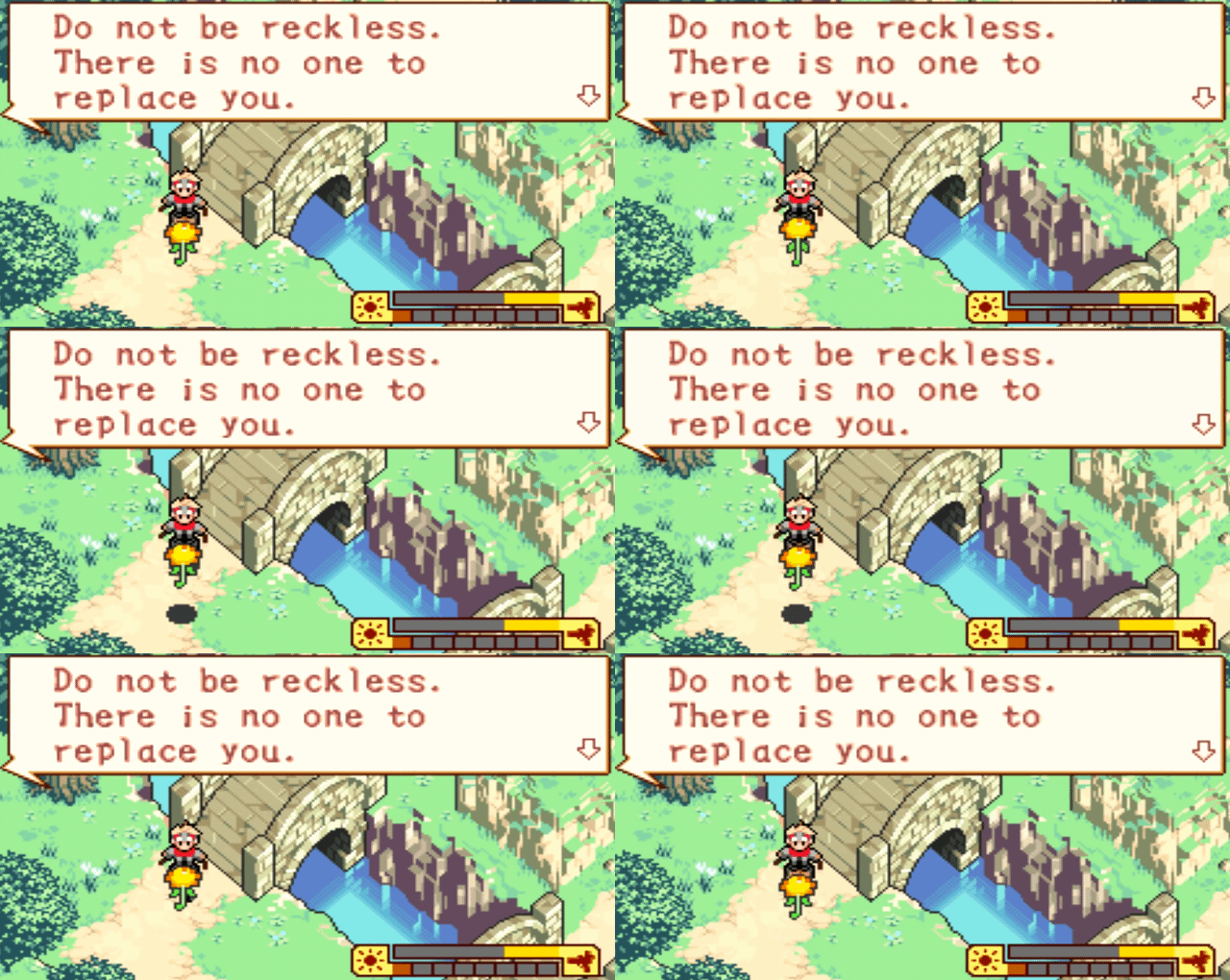
The Boktai series continued with two sequels, “Boktai 2: Solar Boy Django” and “Shin Bokura no Taiyō: Gyakushū no Sabata,” both released in 2004. It was succeeded by the Nintendo DS installment, “Lunar Knights.” The games built on the mechanics of the first game while introducing new features and gameplay elements. However, the series never achieved the level of success that Kojima and his team had hoped for, and the series was eventually discontinued.
Despite this, the Boktai games remain an interesting and innovative example of how video games can incorporate real-world elements into their gameplay. The games’ use of the solar sensor and day to night cycle helped to create a unique and immersive experience that remains memorable for those who played it.




 EXTERNAL GAZER
Leave a comment